How to Validate a Startup Idea Using Proven Methods

Most startup ideas don't fail because they're bad. They fail because they were never properly validated.
Many founders start building based on assumptions. They think people will use the product, pay for it, or even care. But without proof, those assumptions are just hopes.
That's the difference.
In this guide, you'll learn how to validate a startup idea using proven methods that go beyond theory. We'll break down each approach clearly so you can test smarter, build with confidence, and avoid costly mistakes.
Because building comes later.
Validation comes first.
What Does It Really Mean to Validate a Startup Idea?
Most founders mix up testing and validation. They sound similar, but they're not the same.
Testing is about trying things out. You might run a survey, build a quick feature, or launch a landing page to see what happens.
Validation is different.
Validation is the process of proving that your startup idea has real demand. It's not about opinions or guesses. It's about evidence. Real signals from real people that show your idea can actually work.
That's what separates a good idea from a viable business.
A proper validation process focuses on one key question: Do people actually need this enough to take action?
You're not just collecting feedback, you're looking for behaviour. Are people signing up? Are they asking for access? Are they willing to pay?
That's real validation.
Until you see those signals, your idea is still just an assumption.
Why Validation Matters Before You Start Building
Jumping straight into building a product feels exciting. But it's also where most founders make their biggest mistake.
When you skip validation, you risk building something no one actually needs. Weeks go into product development. Sometimes months. And then, at launch, the response is silence.
That's a costly lesson.
Validation helps you check the viability of your startup idea before you commit serious time and money. Instead of guessing, you use real signals to guide your decisions.
This changes everything.
You stop building blindly and start making informed product decisions. You focus only on what your target audience actually needs.
Because the goal isn't just to build something.
It's to build something people actually need and are willing to use.
Start With a Real Problem (Not Just a Product Idea)
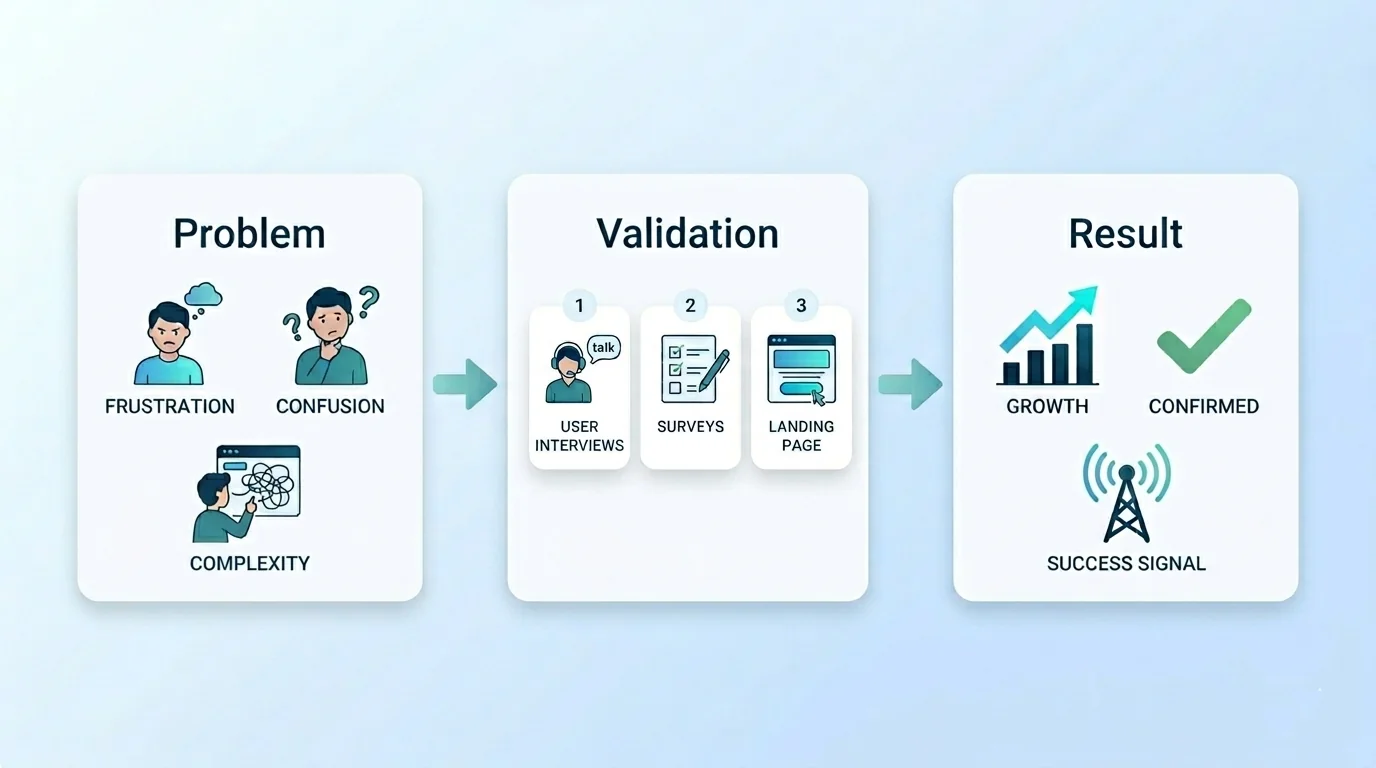
Most founders begin with a product idea. That's natural. But strong startups don't start there, they start with a clear problem.
If your idea doesn't solve a real pain point, validation becomes almost impossible. People might say it sounds interesting, but they won't take action.
So shift your thinking.
Instead of asking, "Is this a good product idea?" ask, "What problem am I solving, and for whom?"
Your target audience matters just as much as the problem itself. A small but deeply affected group is far more valuable than a large, uninterested one.
This is where your value proposition comes in. It should clearly answer one question: Why should someone choose your solution over what they're already doing?
If you can't explain that simply, your idea needs refinement.
The goal here isn't to impress people with a clever idea. It's to solve a problem so clearly that your solution naturally attracts the right people.
That's the foundation of real validation.
Define Your Target Market and Validate the Opportunity
Once you're clear on the problem, the next step is understanding who actually faces it. This is where many founders stay too broad.
Your target market is the larger group that could benefit from your solution. But for early validation, you need to go narrower.
That's your ideal customer.
Think about their behaviour. What are they currently using? What frustrates them? How often do they face this problem? The more specific you are, the easier validation becomes.
Now look at the opportunity size. Your total addressable market tells you how big this space can be if things work. But don't obsess over size in the beginning.
A smaller, well-defined group that truly needs your solution is far more valuable than a large, unfocused audience.
Validation works best when you go deep, not wide.
If your ideal customer clearly understands the problem and sees value in your solution, you're already moving in the right direction.
A Simple Framework to Validate Your Startup Idea
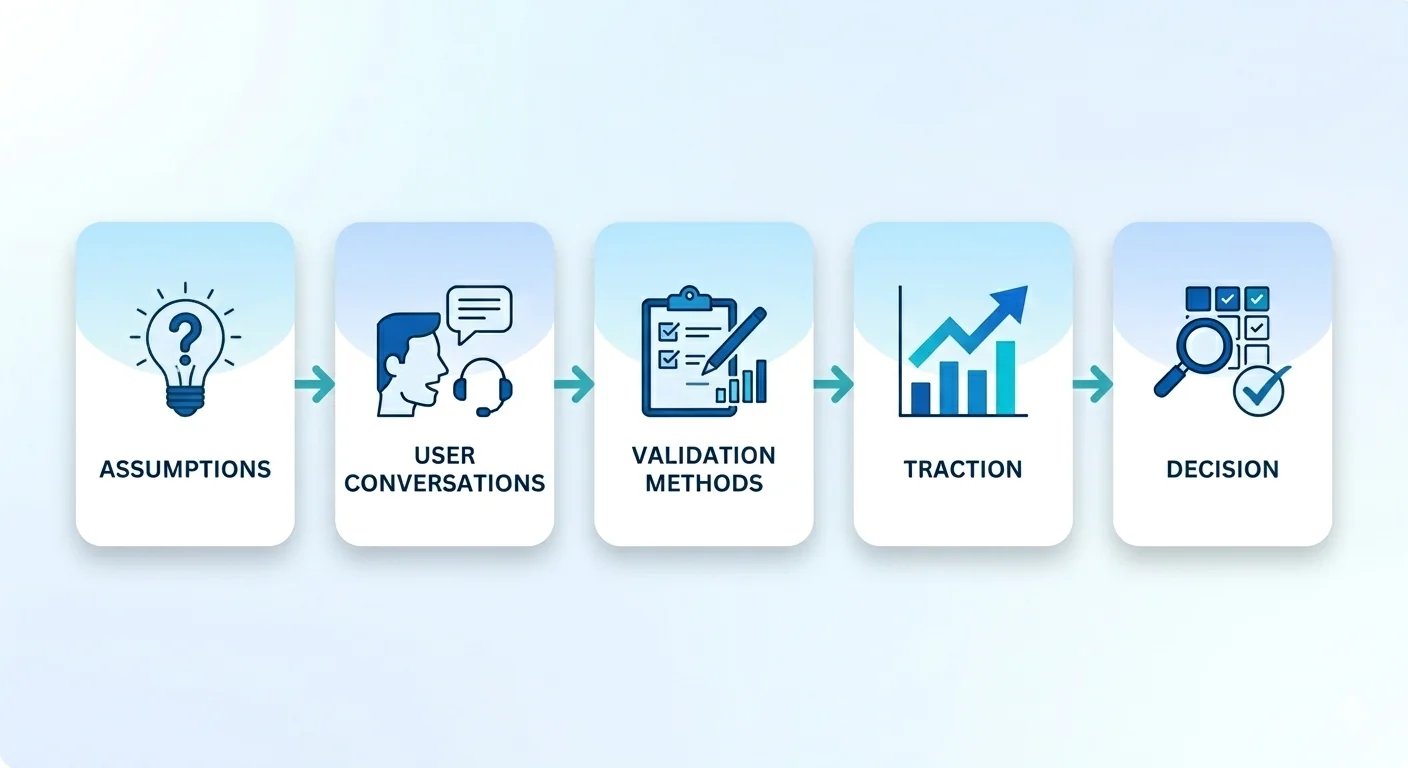
Instead of randomly trying different methods, it helps to follow a clear framework. This keeps your validation process focused and avoids wasted effort.
Here's a simple way to validate your startup idea step by step.
Step 1: Identify Your Core Assumptions
Every startup idea is built on assumptions. You assume people have a problem. You assume they want your solution. You assume they'll pay for it.
Write these down.
Ask yourself: What must be true for this idea to work? Which assumption is the riskiest?
Start there. Because if that assumption fails, the whole idea falls apart.
Step 2: Talk to Potential Customers
Now go out and talk to real people.
Find your potential customers and have direct conversations. Ask about their current behaviour, what they struggle with, and how they currently solve the problem.
Don't pitch your idea immediately.
Focus on understanding their reality. This is where you uncover real insights that a survey alone can't give you.
Step 3: Test Interest with Simple Experiments
Once you understand the problem, test your idea in a simple way.
Create a basic landing page that explains your value proposition. Run a small survey. Share your idea in communities or relevant online groups.
You're not trying to build yet.
You're trying to see if your idea resonates enough for people to take action, like signing up, joining a waitlist, or asking questions.
Step 4: Measure Traction
Now look at what people actually do.
Are they clicking? Signing up? Responding? Ignoring?
Traction is your first real signal of validation. It shows whether your idea connects with your target audience or not.
Focus on meaningful metrics, not vanity numbers.
Step 5: Decide Your Next Move
This is where most founders hesitate.
But the framework is simple.
- If you see strong interest → move forward and start building
- If interest is moderate → refine your idea and test again
- If there's little to no response → consider a pivot
Validation is not about proving your idea right.
It's about making the right decision before you invest more time and energy.
Proven Methods to Validate Your Startup Idea
Once you have a framework, the next step is choosing the right methods. These are proven ways startup founders use to validate ideas before building.
Start with user interviews. This is one of the most effective methods. Talk to your potential customer and understand their problem from their perspective. Don't ask if they like your idea, ask about their current behaviour and pain points.
Next, use a survey to validate patterns. After a few interviews, create a short survey and share it with a wider group. Look for consistent responses that confirm or challenge your assumptions.
A landing page is another powerful method. Create a simple page that explains your product or service and highlights your value proposition. Track how many people sign up or join a waiting list. This is real demand data.
Then comes the MVP (minimum viable product). This is a basic version of your idea that allows you to develop and test with real users. It's not about being perfect, it's about learning fast.
You can also try building in public. Share your idea, progress, and learnings on platforms like LinkedIn or even Reddit. The response you get, or don't get, tells you a lot about market interest.
Each method gives you a different type of signal.
Together, they help you validate your startup idea with real confidence.
How to Validate Demand Without Building a Full Product
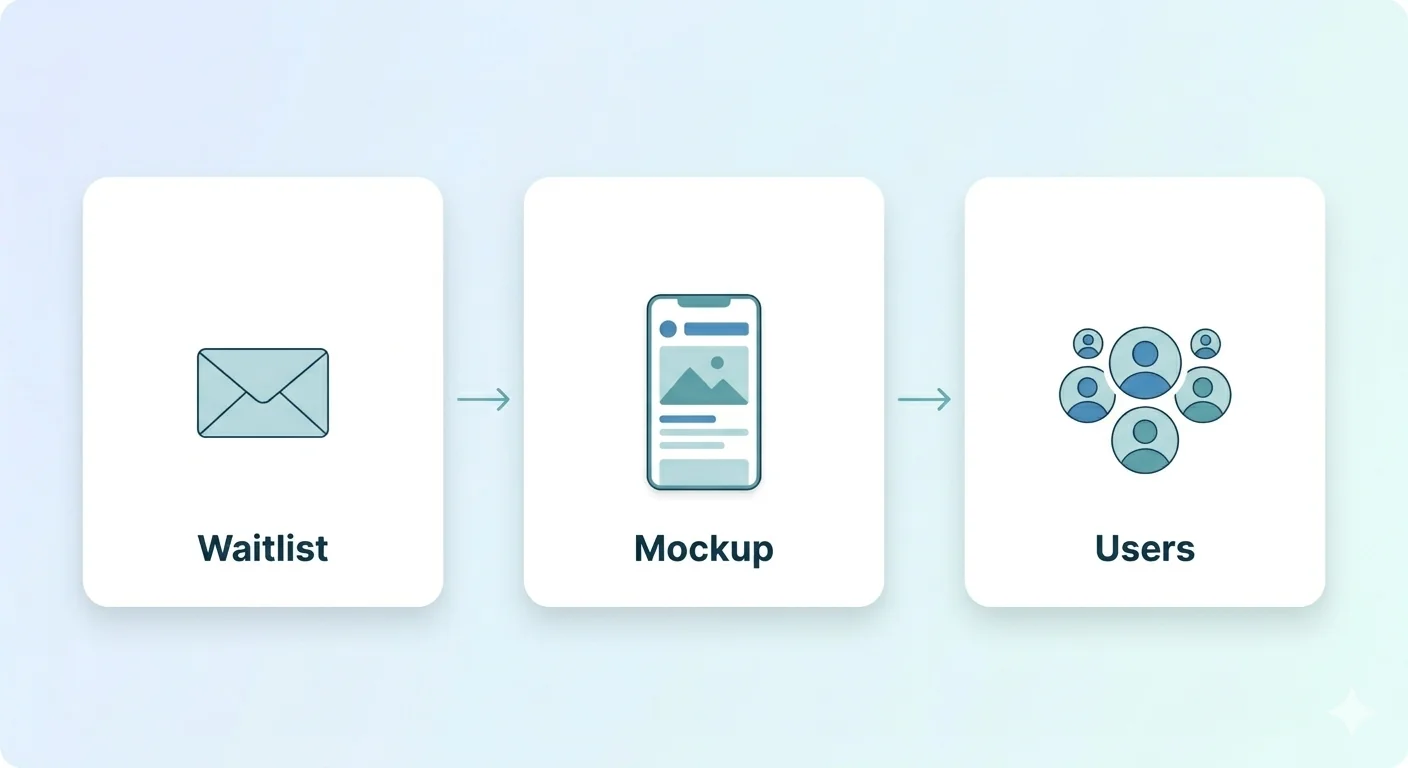
You don't need to build a full product to validate demand. In fact, you shouldn't.
Start simple.
One of the easiest ways is to create a waitlist. Set up a basic landing page and invite people to join early access. If people sign up, it shows real interest.
You can go a step further with pre-orders. Ask users to pay upfront or commit in some way. Even a small payment is a strong signal that someone believes in your solution.
Another approach is using a mockup or simple demo. Show how your product will work using basic designs or a clickable prototype. This helps users understand your idea without a fully built product.
You can also offer a manual version of your solution. Deliver the service yourself before automating it.
The goal is simple.
Validate demand before you invest in product development.
If people show interest and take action, you're on the right track.
Using AI Tools to Speed Up Validation
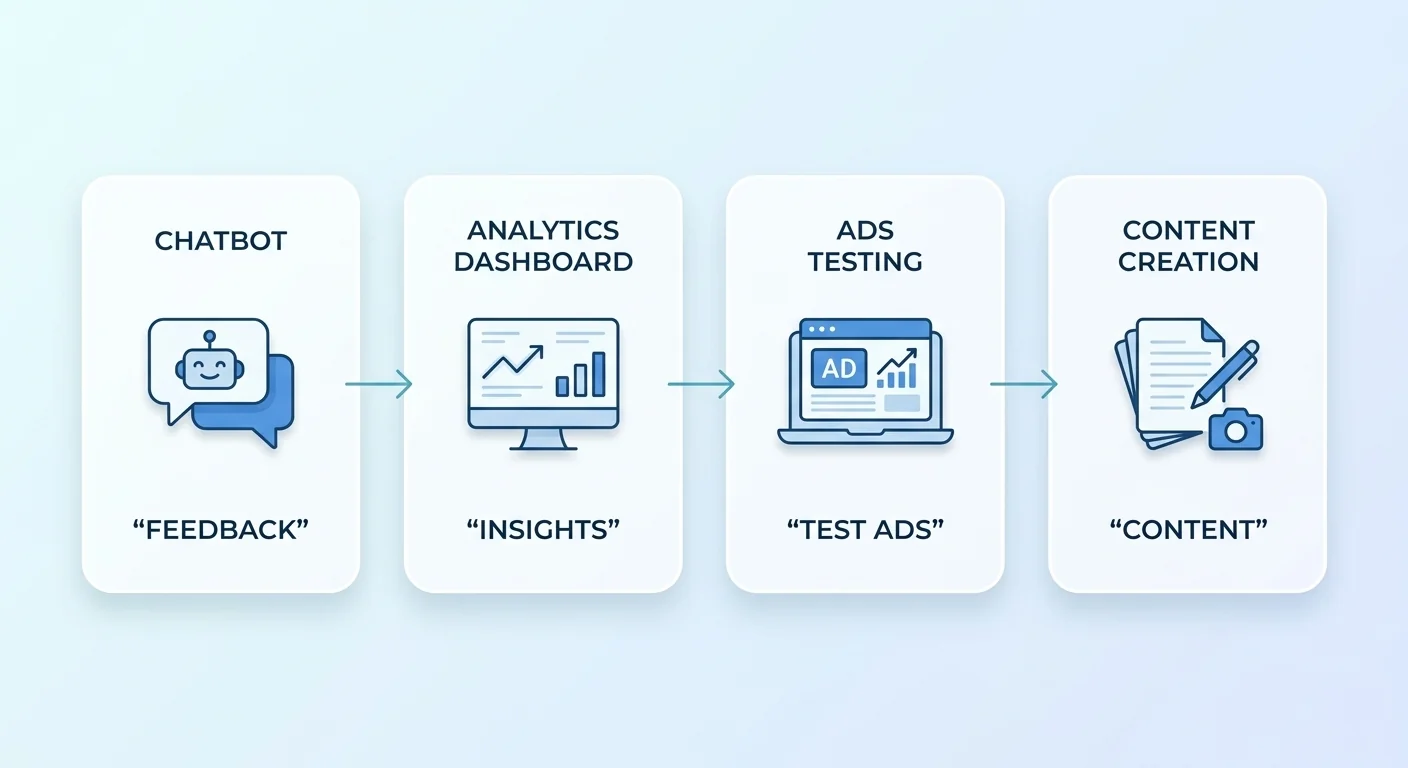
You don't need a full team to validate a startup idea any more. Using AI tools, you can move faster and test more ideas in less time.
You can quickly create landing pages, write copy, design mockups, and even generate ad creatives. This makes it easier to test multiple versions of your idea without a large investment.
For example, you can:
- Generate survey questions and analyse responses
- Build simple mockups for your product idea
- Test messaging with ads or social posts
This is especially helpful if you're working on an AI business or building an AI brand. You can test multiple directions quickly and learn faster.
👉 Join our Founder Partnership Program
Once you've validated your idea and see real traction, the next step is building it properly. That's where a founder partnership program can help.
AI won't replace validation.
But it will help you do it faster and smarter.
Common Mistakes in Startup Idea Validation
Validation sounds straightforward, but many founders get misleading results because of a few common mistakes.
The first is testing with the wrong audience. Feedback from friends, family, or random users doesn't count. You need input from people who actually face the problem you're solving.
The second mistake is fake validation. This happens when people say things like "That sounds great" but don't take any real action. Positive words are not enough.
And then there's ignoring signals.
Sometimes the data is clear, but founders choose to overlook it. Low engagement, no conversions, or lack of response are signals, not setbacks.
Real validation requires honesty.
You're not trying to prove your idea right. You're trying to understand whether it actually works.
When to Move Forward, Pivot, or Drop the Idea
At some point, you need to stop testing and make a call.
So how do you decide?
Start with the strongest signal: paying customers. Even a few people willing to pay shows real demand. It proves your idea solves a problem people value.
Next, look at traction. Are people signing up, engaging, or coming back? Are they recommending it to others? These are early signs that something is working.
Now pay attention to the opposite signals.
If people show interest but don't take action, or if engagement is low despite multiple attempts, it's a sign something needs to change.
That's when you consider a pivot.
Adjust your target audience, refine your value proposition, or change how you present your solution. Sometimes small changes make a big difference.
And if nothing improves?
It's okay to drop the idea.
Because the goal isn't to hold onto an idea, it's to find one that actually works.
FAQ: Startup Idea Validation
How do I validate a startup idea fast?
Start with simple actions. Talk to potential customers, run a quick survey, and create a landing page to measure interest.
Do I need an MVP to validate my idea?
Not always. You can validate your startup idea before building anything. Methods like user interviews, surveys, and landing pages can give you real signals without any product.
What if no one is interested?
That's valuable feedback. It means your idea needs refinement. Revisit the problem, check your target audience, and test again with a different approach.
How much validation is enough?
When you see consistent interest, engagement, or even a few paying customers, you have enough to move forward with confidence.
Key Takeaways
- Validation is about proving real demand, not just testing ideas
- Start with a clear problem and a defined target audience
- Focus on real signals like signups, engagement, and paying customers
- Use simple methods like user interviews, surveys, and landing pages
- Don't rush into product development without validation
- Avoid fake validation and feedback from the wrong audience
- Be ready to refine, pivot, or drop the idea based on real data
- Strong validation gives you confidence before you start building
Ready to Turn Your Validated Idea Into a Real Startup?
Once you've validated your startup idea and seen real demand, the next step is building it the right way.
Instead of figuring everything out on your own, you can move faster with the right structure, guidance, and support. That's exactly what a Founder Partnership Program is built for.
👉 Join our Founder Partnership Program
Start building your startup with confidence.
Related articles




Nuno Dhiren
Founder, Internwise
You've learned how to validate your startup idea. Now it's time to build it the right way. Our Founder Partnership Program gives you structured guidance, expert mentorship, and a clear roadmap to turn your validated idea into a real, profitable business.
Join other ambitious founders who are building sustainable startups from day one.