Startup Validation Checklist for First-Time Founders

Most founders think the hard part is over once they validate their startup idea. In reality, this is where things often go wrong. Many early-stage founders move too fast into building, only to realise later that they have built the wrong version of the product.
The confusion usually starts after validation. What should you build first? How much is enough? And how do you avoid wasting months on features that do not matter?
This is where a clear startup validation checklist becomes important. It helps you move from idea validation to execution with better decisions. Instead of guessing, you focus on building a minimum viable product that solves a real problem and gives you meaningful feedback.
In this guide, you will learn what to do after validation, what to include in your MVP, what to avoid, and how to move towards your first users with clarity and confidence.
What Does "Validation Complete" Actually Mean for a Startup?
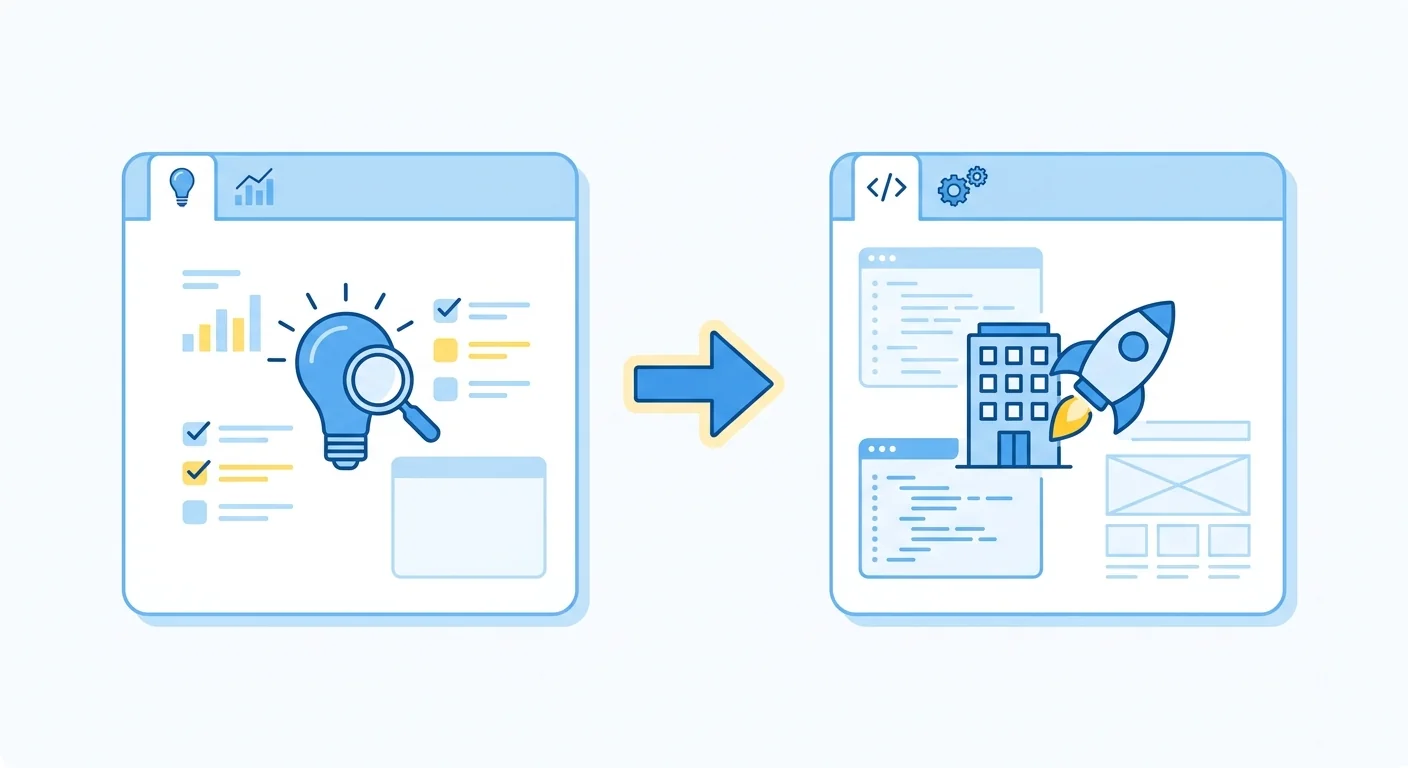
Most founders think they have validated their idea once people say "This sounds good." That is not validation. It is interest. And interest does not always turn into action.
Validation is complete when you start seeing real signals, not opinions. The first sign is a clear problem exists. Your target customer recognises it without much explanation. The second is willingness to pay. Even a small commitment matters here. If someone is ready to pay, pre-order, or seriously consider buying, it changes everything.
The third signal is early traction. This could be people signing up on your landing page, asking when the product will be ready, or even becoming your first 10 customers through direct outreach. You do not need scale at this stage, but you do need genuine intent.
Another important factor is the quality of feedback. If your potential customers can clearly explain how your product or service helps them, you are moving in the right direction.
Most founders assume validation is done too early. Real validation shows up through behaviour, not just words. That is the point where building actually makes sense.
The Real Startup Validation Checklist Before You Build Anything
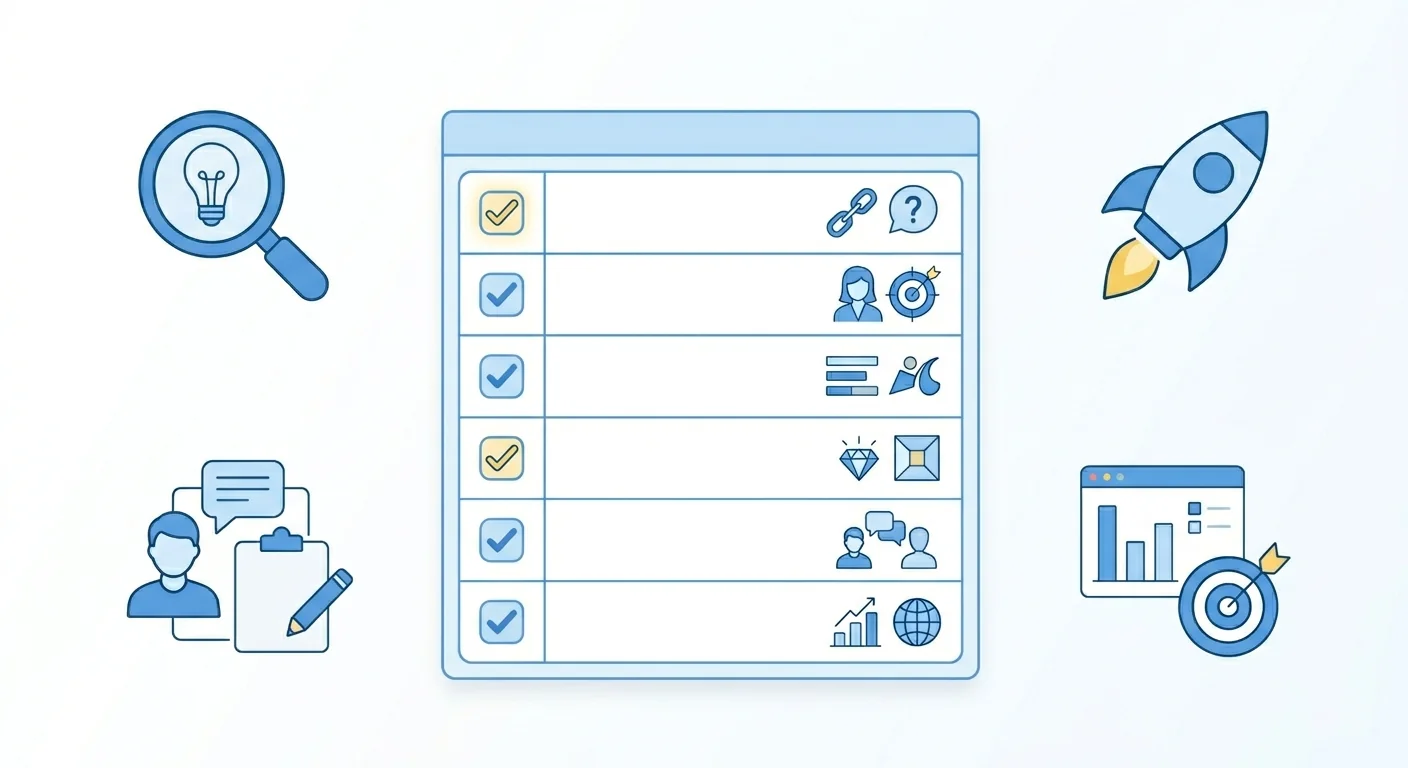
Before you start building, you need a simple startup validation checklist to make sure you are not moving too early. This is not a long or complicated validation framework. It is a practical filter to confirm you are ready to take the next step.
Start with the problem. Can you clearly describe the pain point your target customer faces? More importantly, do they recognise it themselves without needing a long explanation? If the problem is not obvious, building a solution will not help.
Next is your target customer. You should know exactly who you are building for. A clear target audience makes everything easier, from product decisions to early outreach. Avoid being too broad at this stage.
Then look at demand signals. Have you seen real interest? This could be sign-ups on a simple landing page, replies from direct outreach, or conversations where potential customers ask when your product will be available. This is a key part of any strong validation framework.
Early traction matters more than scale. Even getting your first 10 customers or strong intent from a small group is enough to move forward. You do not need a large audience yet.
Finally, check your value proposition. Can you clearly explain how your product or service solves the problem in a simple way? If this is not clear, it is better to refine it before building.
This checklist keeps your focus sharp and reduces the risk of building the wrong thing.
Why Most Founders Still Build the Wrong Product After Validation
"Validation reduces risk, but it does not guarantee direction."
This is where many founders get it wrong. After going through the validation phase, there is a sense of confidence that often turns into overconfidence. You feel like you understand the problem, so you move straight into building. But validation only tells you that the problem is worth solving. It does not tell you exactly what to build.
One common mistake is feature overload. Founders try to include everything they have heard during conversations or feedback. Instead of focusing on one clear solution, they build a complex version of the product. This slows down progress and makes it harder to learn what actually works.
Another issue is misreading feedback. When users show interest, founders assume they want a fully developed product. In reality, most early feedback is about the problem, not the solution. This leads to building features that users never asked for.
Many early-stage founders also skip deeper thinking about priorities. They move fast, but not in the right direction. The goal at this stage is not to build more but to build smarter. Clear decisions matter more than speed alone.
MVP Is the Bridge Between Validation and Execution
Many founders treat the minimum viable product as the first version of their full product. That is where things start going wrong. Your MVP is not your product. It is a bridge between validation and execution.
At this stage, the goal is not to build something perfect. The goal is to create a simple version of your product that allows you to test real behaviour. What people say during validation is useful, but what they actually do with your product matters more.
Think of MVP as a learning system. Every feature, screen, or interaction should help you answer one question: are users actually using this to solve their problem? If not, you need to adjust quickly. This is where many founders overcomplicate things by adding extra features that do not contribute to learning.
An effective MVP keeps things simple and focused. It helps you move from assumptions to real insights. Instead of guessing what users want, you observe how they interact with your product or service.
When you approach it this way, your MVP becomes a tool for clarity. It reduces risk, speeds up decision-making, and helps you move forward with more confidence.
What Should You Actually Build First (And What You Must Avoid)
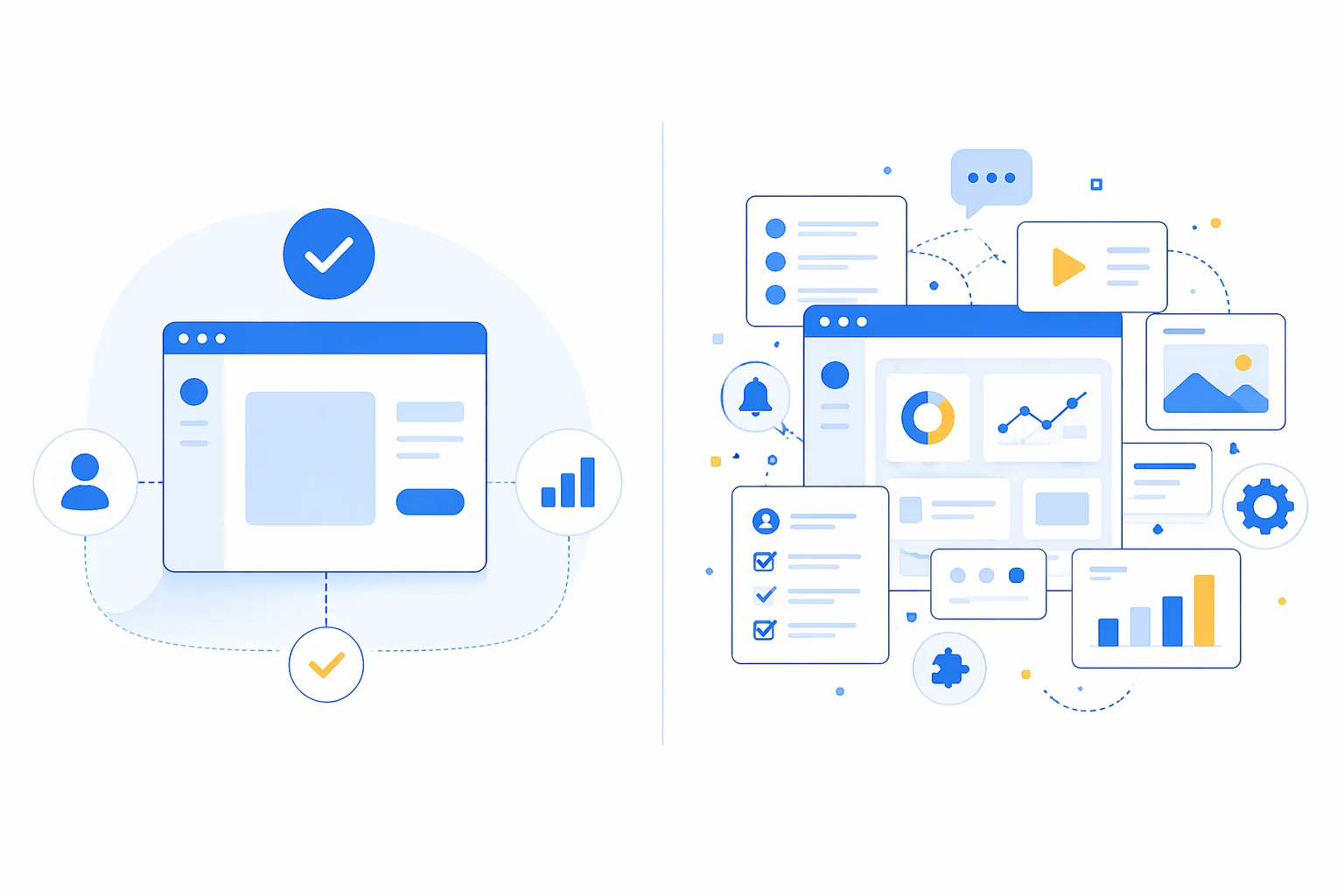
This is where most founders either move forward with clarity or waste months building the wrong things. After your startup validation, your focus should be simple: build the smallest possible solution that solves the core pain point.
Start with one clear feature. Not a platform, not a system, just one core function that directly helps your target customer. If your product idea requires multiple steps, pick the one that delivers immediate value. This becomes your first usable version of your product.
Do this:
- Build only what is required to solve the problem
- Keep the flow simple and usable
- Focus on how users interact with the core feature
- Make it easy to test and gather feedback
Avoid this:
- Do not build dashboards or analytics tools early
- Do not aim for perfect UI or design polish
- Do not add automation before understanding usage
- Do not try to scale from day one
Many founders confuse building with progress. But building more does not mean learning more. Every extra feature increases complexity and slows down your ability to understand what actually works. At this stage, clarity beats completeness. If your MVP solves one problem well, you are moving in the right direction.
Choosing the Right MVP Approach Based on Your Startup Type
Not every startup needs the same MVP approach. The right choice depends on your product, your target customer, and how quickly you want to test real behaviour. The goal is simple: learn fast without overbuilding.
A landing page MVP works well when you want to test demand. You create a simple page explaining your value proposition and see if people sign up or show interest. This is useful for both B2B and SaaS ideas where you want to validate messaging and early traction.
A concierge MVP is more hands-on. Instead of building a full system, you manually deliver the product or service. This works well for early-stage founders who want to understand real user behaviour before building software.
A prototype helps you test the experience. It does not need to be fully functional. It just shows how your product will work and allows you to gather feedback from potential users.
No-code tools are useful when you want to build a simple version of your product quickly. They allow you to test workflows without investing heavily in development.
The best approach is the one that gives you clear feedback with the least effort.
How to Launch Your MVP Without Waiting for Perfect
One of the biggest mistakes founders make while launching a startup is waiting too long. They keep improving, tweaking, and polishing, thinking the product needs to feel complete before anyone sees it. In reality, that delay slows down learning.
At the MVP stage, speed matters more than perfection. Your goal is not to impress. It is to test how real users respond to your product or service. Even a simple, imperfect version is enough to start getting useful insights.
Start with a small audience. You do not need a big launch or marketing campaign. Focus on people who are already close to the problem. This could be your network, early sign-ups, or relevant communities where your target customer is active.
Platforms like LinkedIn are a good starting point. You can share what you are building, explain the problem you are solving, and invite people to try it. You can also join niche communities where your target audience already exists and start conversations there.
The key is simple. Launch early, observe behaviour, and learn quickly. That is how you move forward with clarity.
How to Get Your First 10 Customers (Without Ads)

Getting your first 10 customers is not a marketing problem. It is a clarity and effort problem. At this stage, ads will not help much. You do not yet know what message works or which users truly care. That is why direct action matters more than scale.
Start with direct outreach. Reach out to people who clearly fit your target customer profile. This could be through LinkedIn, email, or communities where your audience is active. Do not pitch immediately. Start a conversation around the problem. Ask how they currently solve it and where they struggle.
This is where founder-led sales becomes important. As a founder, you understand the problem better than anyone else. Use that advantage. Talk to users, show them your MVP, and guide them through the experience. These early conversations give you insights you will not get from dashboards or reports.
Focus on quality, not volume. Even a few strong conversations can help you refine your product or service quickly. Listen carefully, take notes, and adjust your approach based on real feedback.
Your goal is simple. Turn conversations into users. These first few customers will shape your direction more than any large campaign ever will.
👉 Join our Founder Partnership Program
Once you have validated your idea and are ready to move into execution, structured support can make a big difference. The Founder Partnership Program helps founders move from MVP to a scalable product with the right direction and focus.
What Metrics Actually Matter in the Early Stage
At the early stage, most founders track the wrong things. It is easy to get distracted by numbers like page views, impressions, or social likes. These look good, but they do not tell you if your product is actually working.
What matters is how users behave. Start with usage. Are people actively using your product or service after trying it once? Even a simple interaction tells you more than sign-ups alone. Then look at engagement. Are users coming back? Are they spending time with the core feature you built?
Next is retention. Do users return after their first experience, or do they drop off? Retention is one of the strongest signals that you are solving a real problem.
Finally, focus on willingness to pay. This is where validation becomes real. If users are ready to pay, even at an early stage, it shows strong intent and confirms that your solution has value.
Avoid vanity metrics. They create a false sense of progress and can lead you in the wrong direction. At this stage, fewer but meaningful metrics will give you better clarity and help you make smarter decisions.
What to Do After MVP: Iterate, Scale, or Pivot
"Your MVP gives direction, not success."
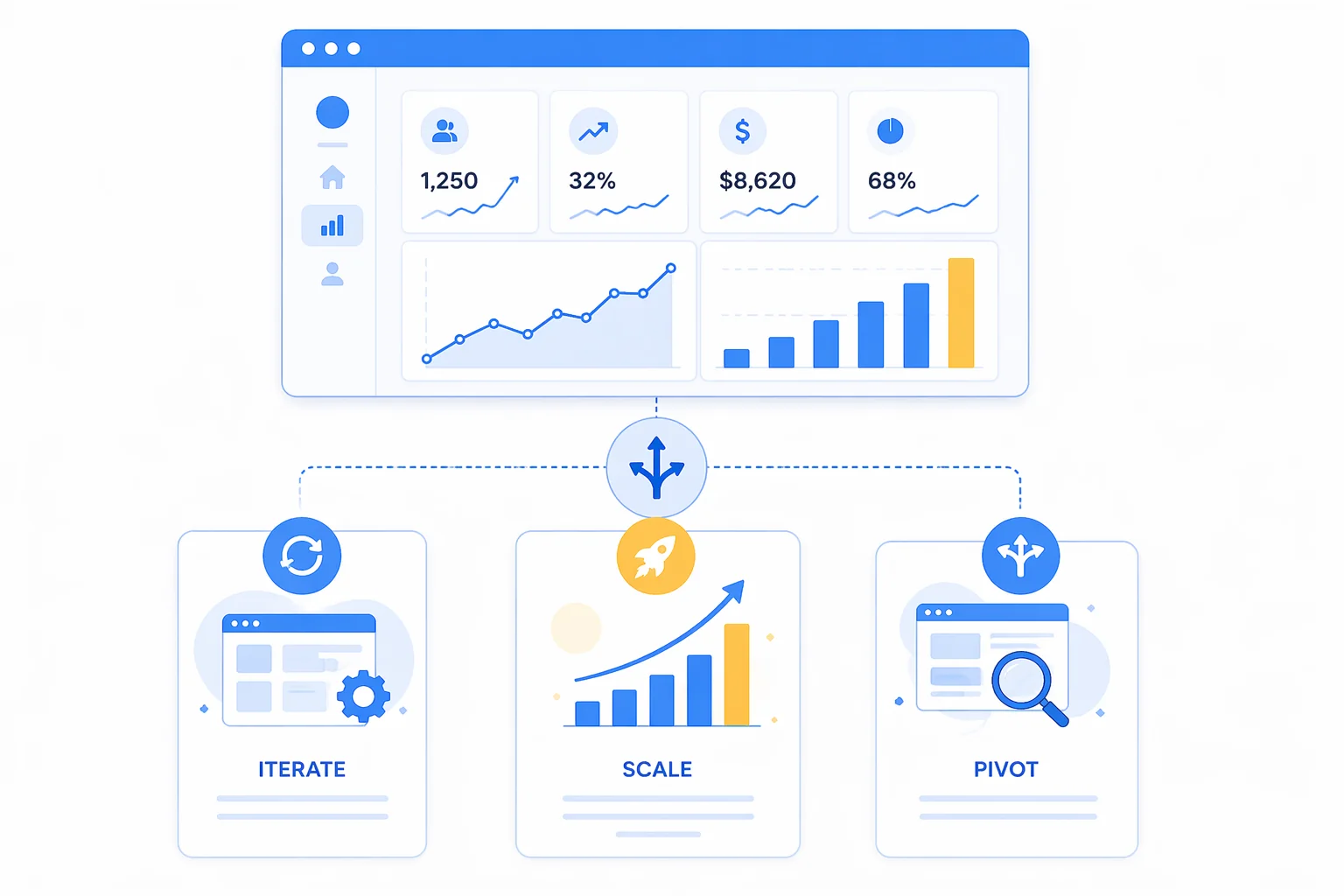
Once your MVP is live and you start getting real user behaviour, the next step is making the right decision. This is where many founders either move forward with clarity or get stuck.
If users are engaging but not fully converting, the right move is to iterate. Improve the core feature, refine the experience, and adjust based on feedback. Small changes at this stage can make a big difference. Focus on learning and improving, not rebuilding everything.
If you start seeing strong traction, consistent usage, and early signs of willingness to pay, then it may be time to scale. This means investing more in development, improving the product, and gradually increasing customer acquisition. But scaling too early can create problems, so make sure your foundation is strong.
If the signals are weak, low engagement, poor retention, or lack of interest, then you need to consider a pivot. This does not mean failure. It means adjusting your direction based on what you have learned. Sometimes the problem is different from what you initially thought.
The key is to stay honest with the data. Your decisions should come from real user behaviour, not assumptions.
When You're Ready to Move From MVP to Real Product
Moving from MVP to a real product is not about time. It is about signals. Many founders assume that after a few weeks or months, they should start building a full product. In reality, the decision should come from user behaviour.
The first sign is repeat usage. If users are coming back without reminders, it shows that your product or service is solving a real problem. This is one of the earliest indicators of product-market fit.
The second signal is paying users. Even a small group willing to pay proves that your value proposition is strong. It shows that your solution is not just interesting but valuable.
You should also look at how easily you can explain your product. If your messaging is clear and users understand it quickly, it becomes easier to grow and scale.
This is the stage where execution becomes more important than experimentation. You start refining, improving, and building with more confidence.
FAQ: Startup Validation Checklist
What is MVP in a startup?
An MVP, or minimum viable product, is the simplest version of your product that solves a core problem. It helps you test real user behaviour and gather feedback before building a full product.
Can I build an MVP without coding?
Yes, many founders use no-code tools, prototypes, or even manual approaches to create an MVP. The goal is to test the idea, not build a perfect system.
How long should MVP take?
There is no fixed timeline, but most MVPs should be built within a few weeks to a couple of months. If it takes longer, you may be overbuilding.
How much should MVP cost?
Costs vary depending on the approach, but the idea is to keep it as low as possible. Focus on learning, not investing heavily at the start.
Key Takeaways
- Start small. Do not try to build a full product in the beginning. Focus on a simple version that solves one clear problem.
- Focus on core value. Your MVP should directly address the main pain point of your target customer, nothing extra.
- Launch early. Do not wait for perfection. Getting your product in front of real users is what moves you forward.
- Learn fast. Pay attention to how users interact with your product. Real behaviour gives better insights than assumptions.
- Iterate consistently. Use feedback and data to refine your product step by step instead of making big changes all at once.
Ready to Move Forward After Validation?
If you have already validated your startup idea, the next challenge is execution. This is where most founders struggle. Turning a validated idea into a real product, launching it effectively, and learning from real users requires the right structure and focus.
👉 Join our Founder Partnership Program
The Founder Partnership Program is designed for this stage. It supports founders in building their MVP, making better product decisions, and moving towards early traction with clarity. Instead of guessing what to do next, you follow a structured approach to execution and growth.
Related articles




Nuno Dhiren
Founder, Internwise
You've learned how to validate your startup idea. Now it's time to build it the right way. Our Founder Partnership Program gives you structured guidance, expert mentorship, and a clear roadmap to turn your validated idea into a real, profitable business.
Join other ambitious founders who are building sustainable startups from day one.