Startup MVP Guide: How to Build and Launch Your Minimum Viable Product
Most founders do not fail because their idea is bad. They fail because they spend months building the wrong product. It is common to see founders add more features, polish every detail, and delay launch, hoping it will impress users. In reality, this approach slows learning and wastes time.
This startup MVP guide will help you think differently. A minimum viable product is not about building everything. It is about building the smallest version that solves a real problem and gets you to real users faster. If you have already validated your idea, the next step is to build an MVP that allows you to test, learn, and improve.
In this guide, you will learn what to include, what to avoid, and how to launch with confidence. More importantly, you will understand how to use your minimum viable product as a learning tool so you can make better decisions and move forward with clarity.
What Is an MVP (and What It's Not)
A minimum viable product is the simplest version of your product that allows you to test your idea with real users. It is not about building something perfect. It is about creating a working version of your product that solves one clear problem and helps you learn what actually matters.
Many founders misunderstand this stage. They think they need a polished system with multiple features before launching. That is where they go wrong. An MVP is not your final product. It is an early step that helps you understand user behaviour, validate decisions, and move forward with confidence.
Think of it this way. Instead of building everything at once, you focus on one core value and test it in the real market. This version of your product should be good enough for users to try, but simple enough for you to build quickly.
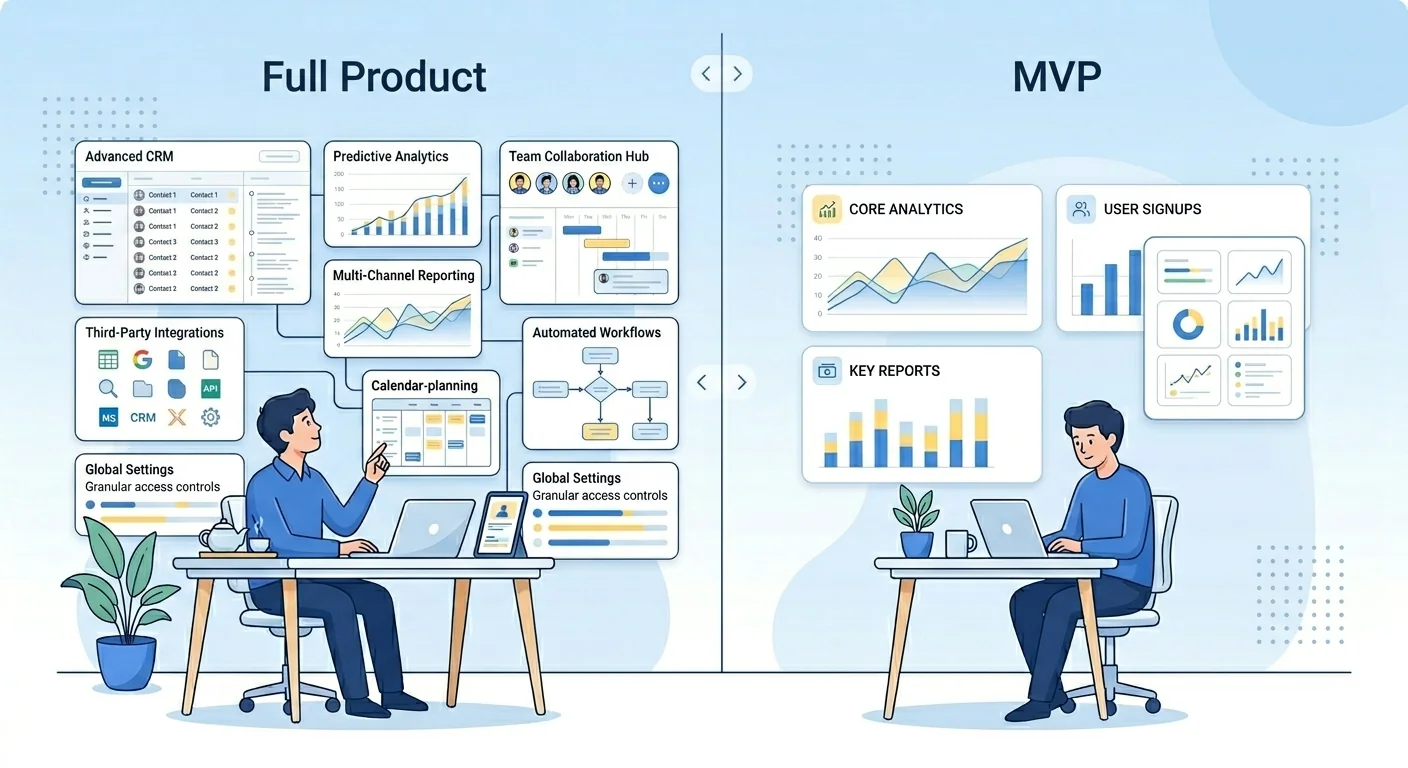
An MVP does not aim to impress everyone. Its purpose is to help you learn fast, make better decisions, and improve based on real feedback rather than assumptions.
Why Most Founders Get MVP Wrong
Most founders struggle with their MVP because they try to do too much too early. Instead of focusing on core features, they keep adding ideas, thinking it will make the product stronger. In reality, this leads to confusion, delays, and a product that is harder to test.
Another common issue is the fear of launching early. Founders worry about judgement, negative feedback, or the product not looking complete. So they keep improving it in isolation. The problem is, without real users, there is no real learning.
There is also a strong desire to impress. Many founders want their product to look advanced from day one. They forget that the goal is not to showcase everything, but to understand what actually works. You should not build unnecessary features at this stage. Your product must be viable, but it does not need to be perfect.
Your MVP is not your product. It is your first real test.
If you focus on learning instead of impressing, you will move faster and make better decisions.
When Should You Build an MVP?
You should build an MVP only after you have clear validation. Many founders rush into building while still unsure about the problem or the audience. That leads to confusion and wasted effort. Before you start, you need to validate a product idea and understand if there is real demand.
If you are still guessing what users want, it is too early. The right time to build is when you have spoken to potential users, seen consistent interest, and have confidence that your idea solves a real problem in the market. This clarity allows you to move with purpose instead of assumptions.
👉 Join our Founder Partnership Program
Once founders validate their idea, the next step is execution. The Founder Partnership Program is designed for this stage, helping you turn a validated idea into a working MVP with clear direction and focus.
What Should You Include in Your MVP (and What to Skip)
The biggest challenge while building an MVP is deciding what to include and what to leave out. Many founders fall into the trap of adding too many features, thinking it will improve the product. In reality, it slows everything down and makes it harder to test.
Your focus should be on essential features only. Ask yourself a simple question: what is the smallest version that still solves the problem? This will help you identify the core value you want to deliver. Your MVP should include a clear set of features that directly provide value to the customer, without distractions.
Anything that does not contribute to solving the main problem should be skipped for now. These are nice-to-have features, not priorities. You can always add them later once you have real feedback and direction.
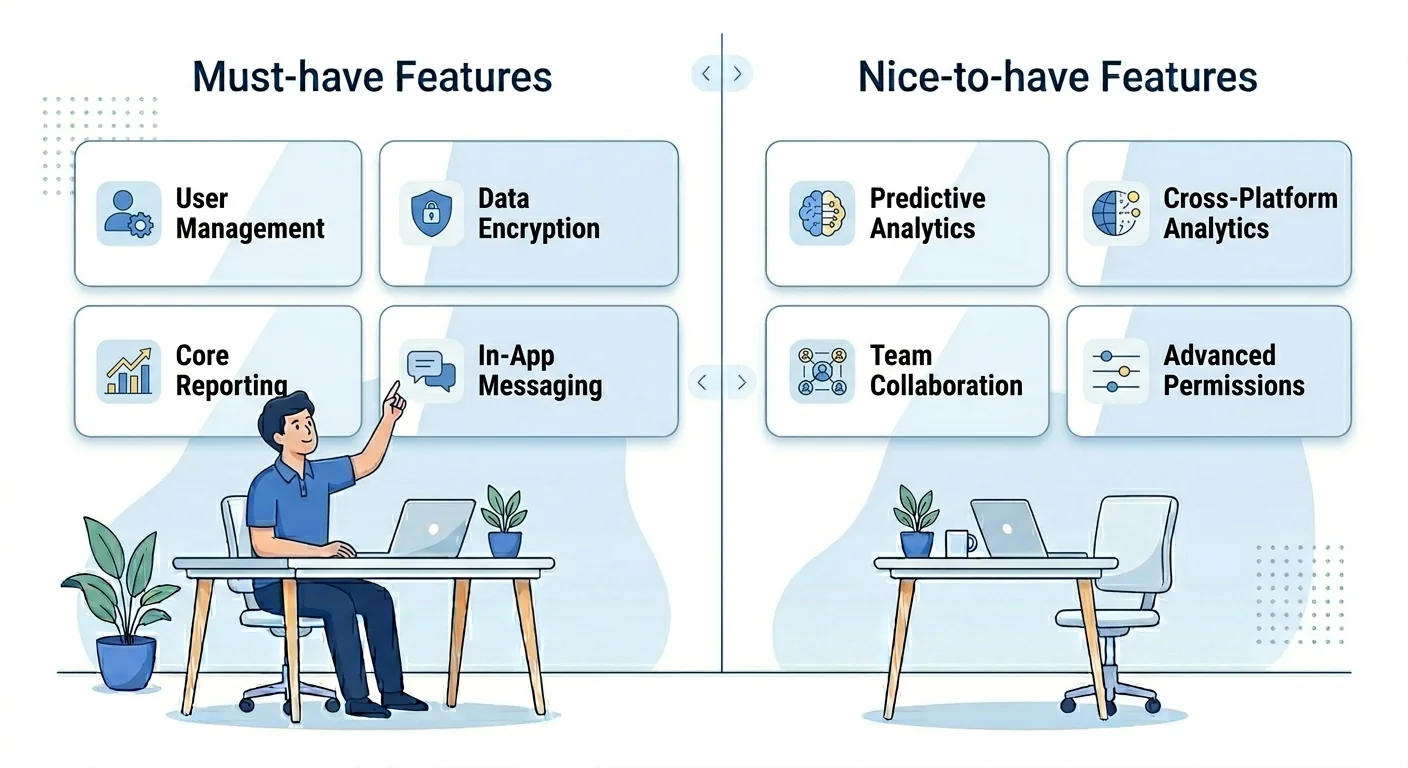
Building with the least amount of effort does not mean compromising quality. It means being intentional. You are creating something simple but useful, so users can interact with it and help you learn what actually matters.
MVP Is Not About Building, It's About Learning
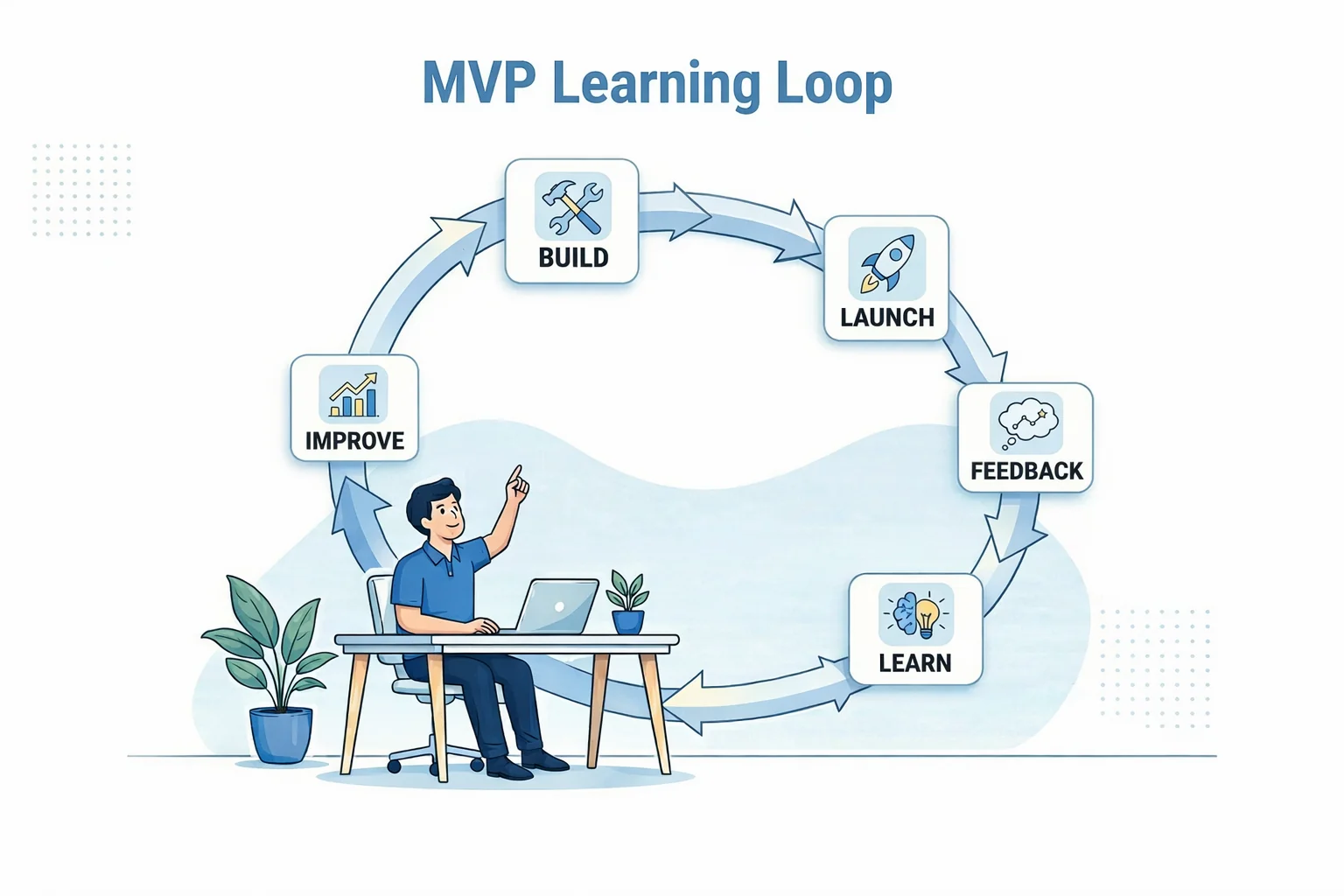
An MVP should be treated as an experiment, not just a product. The goal is not to build something and move on. The goal is to understand how users respond and what you need to improve next. This is where many founders miss the point. They focus on building, but ignore the learning that comes after.
Every MVP should create a simple feedback loop. You launch, observe how people use it, gather feedback, and then decide what to change. This process helps you make decisions based on real usage, not assumptions. It also leads to validated learning, which is far more valuable than opinions or guesses.
You should actively look for user feedback, even if it is negative. That is where the real insight comes from. When you gather feedback from real users, you begin to see patterns, gaps, and opportunities to improve.
If you did not learn anything, your MVP failed, even if it worked.
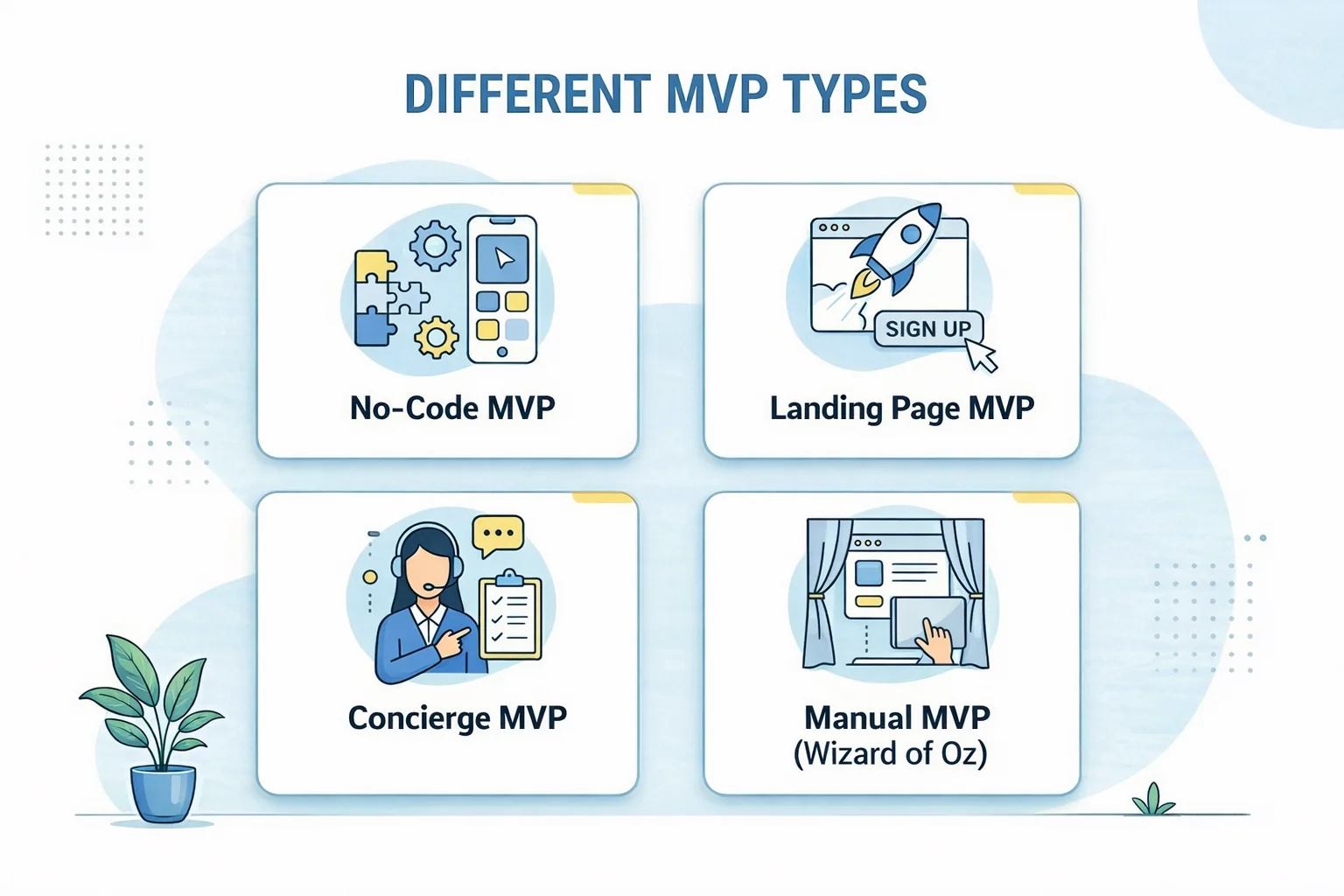
Different Ways to Build an MVP
There is no single way to build an MVP. The right approach depends on your idea, your resources, and how quickly you want to learn. The key is to choose a method that helps you test your core value without overcomplicating the process.
One common approach is using no-code tools. These allow you to create a basic version of a product without heavy development. It works well for software products where you want to test functionality quickly. For example, you can build a simple app interface using no-code platforms and validate how users interact with it.
Another option is a simple landing page. This is one of the fastest ways to test demand. You present your idea clearly and measure interest through sign-ups or enquiries. It helps you understand whether people are willing to take action.
A concierge or manual MVP is also effective. Instead of building technology, you deliver the service manually behind the scenes. This helps you learn what users actually need before investing time in development.
You can also create a basic working product with limited functionality. The goal in every case is the same: learn quickly and improve based on real user behaviour.
How to Launch Your MVP
Launching your MVP is where real learning begins. Many founders delay this step because they want everything to feel complete. That is a mistake. You do not need a perfect product to start. You need something usable that solves a clear problem.
When launching an MVP, focus on speed and clarity. A faster time to market helps you test your idea sooner and understand how people respond. Keep your product launch simple. Share what your product does, who it is for, and why it matters. Avoid over-explaining or adding unnecessary features before launch.
Start small and choose platforms where your target users are active. LinkedIn works well for professional audiences. Reddit can help you reach niche communities. You can also engage directly in relevant communities where people are already discussing the problem you are solving.
Launching an MVP is not about getting everything right. It is about getting real users to interact with your product so you can learn, improve, and move forward with confidence.
Getting Your First Users and Feedback
Getting your first users is one of the most important steps after launch. You do not need a large audience at this stage. You need the right people. Focus on early adopters who already feel the problem you are trying to solve. These users are more likely to try something new and share honest opinions.
Start with simple outreach. Reach out through LinkedIn, niche communities, or direct messages. Do not try to sell immediately. Instead, invite people to try your product and share their experience. Early users are valuable because they give you insight that you cannot get from assumptions.
Talking to customers is where real learning happens. Observe how a real user interacts with your product. Ask open questions. Understand what works, what feels confusing, and what is missing. This helps you gather customer feedback that is practical and actionable.
The goal is not just to collect opinions, but to identify patterns. When multiple users highlight the same issue, it becomes a clear signal. This is how you improve your product with confidence and move closer to real product-market fit.
How to Measure MVP Success
Measuring MVP success is not about chasing vanity metrics. High traffic or social likes may look good, but they do not tell you if your product is actually working. What matters are real signals that show how users behave and whether they find value in what you have built.
Start with simple indicators. Sign-ups show initial interest, but they are only the beginning. The real insight comes from usage. Are people actively using your product, or do they drop off after the first interaction? This tells you if your core value is clear and useful. Paying users are an even stronger signal, as they show that people are willing to commit.
Focus on success indicators that reflect real engagement. Look at actions users take, how often they return, and where they struggle. All of this should be analysed based on user behaviour rather than assumptions.
These insights help you improve the product in the right direction. Instead of guessing what to build next, you make decisions backed by real data and actual user experience.
What to Do After MVP (Iterate, Scale, or Pivot)
Once your MVP is in the hands of users, the next step is deciding what to do with the insights you have gathered. This is where a clear decision framework becomes important. Your goal is to understand whether you should move forward, make improvements, or change direction based on what users are actually doing.
If users are engaging and finding value, you can start to iterate and improve. Focus on fixing pain points, refining the experience, and strengthening your core offering. These small changes should be guided by feedback and real behaviour, not assumptions. Over time, this helps shape a practical product roadmap.
If engagement is low or feedback highlights deeper issues, you may need to rethink your approach. Sometimes this means making significant changes to your product or targeting a different problem altogether. This is not failure. It is part of the process.
Your MVP gives direction, not success. Use what you have learned to make informed decisions and move forward with clarity.
FAQ: Startup MVP Guide
What is MVP in a startup?
An MVP is the simplest version of a product that helps you test an idea with real users and learn quickly. The goal is not perfection but validated learning.
Can I build an MVP without coding?
Yes. Many founders use no-code tools or manual methods to test their idea before investing in full development. A landing page or concierge approach can be just as effective.
How long should an MVP take?
It depends on the idea, but most MVPs should be built quickly. The goal is speed and learning, not perfection. Weeks, not months, is the right mindset.
How much should an MVP cost?
Cost should be kept low. Focus on building only what is necessary to test your core idea and gather feedback. Avoid spending on features that are not essential to your first test.
Key Takeaways
- Build small and stay focused on what matters. A minimum viable product helps you deliver value without overcomplicating the process.
- Focus on core value. Your product should solve one clear problem effectively rather than trying to do everything at once.
- Launch early instead of waiting for perfection. Real learning begins only when users start interacting with your product.
- Learn fast by observing behaviour and collecting feedback from real users. This is what moves you forward with clarity.
- Iterate based on what you learn. Make small changes, test again, and keep improving. This is how a successful MVP is built over time.
Build Your MVP with the Right Support
Once you have validated your idea, the next step is execution. This is where many founders feel stuck or unsure about what to build and how to move forward. Instead of figuring everything out alone, having the right guidance can save time and help you avoid costly mistakes.
👉 Join our Founder Partnership Program
The Founder Partnership Program supports you at this stage. From building your MVP to refining your product and preparing for growth, you get structured support focused on real progress, not guesswork.
Related articles




Nuno Dhiren
Founder, Internwise
You've learned how to validate your startup idea. Now it's time to build it the right way. Our Founder Partnership Program gives you structured guidance, expert mentorship, and a clear roadmap to turn your validated idea into a real, profitable business.
Join other ambitious founders who are building sustainable startups from day one.